
- Espresso Machine
- Coffee Grinder
 WhiteBlack
Silver
Red
WhiteBlackRed
WhiteBlack
WhiteBlack
Silver
Red
WhiteBlackRed - Barista Tools
- Brewing
White
Silver
BluePink




























How to Choose a Commercial Coffee Machine for Your Cafe (2026 Buyer’s Guide)


40%–60% of the total equipment investment
The key principle is simple:
real output demand and business operation
Step 1: Define Your Business Usage Scenario
The first step is understanding how coffee functions within your business model. A specialty cafe focused on espresso quality will prioritize control and stability, while a high-volume chain store will value speed and automation.
Daily cup volume is the most practical starting point for narrowing machine options.
| Business Scenario | Daily Cups | Recommended Configuration |
|---|---|---|
| Small cafe / Mobile carts | <150 | 1–2 Group Semi-Automatic |
| Neighborhood cafe | 150–300 | 2 Group Commercial Machine |
| Busy cafe / bakery | 300–600 | 3 Group or Automatic |
| Chain / high-volume store | 600+ | Multi-group or Super-Automatic |
Choosing based on peak-hour demand — not just daily totals — prevents future service bottlenecks.

Step 2: Choose the Machine Type and Size Based on Volume
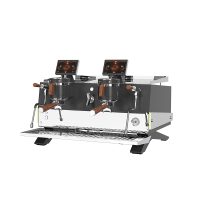
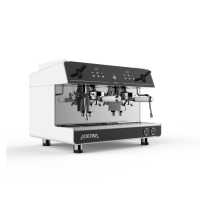
Semi-automatic commercial espresso machines
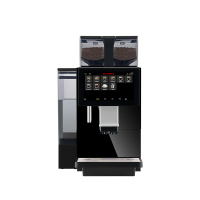
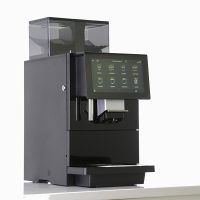
Fully automatic espresso machines
- Single-group semi-automatic machines
- Double-group semi-automatic machines
- Multi-group machines (three groups or more)
|
|
|
|
|
|
|
|
|
|
|
|
|
|
|
|

Step 3: Determine Boiler Structure Based on Drink Menu
- Espresso-focused menus
- Milk-based menus
- Single Boiler Machines
- Dual Boiler Machines
Industry experience shows:
50% of total sales
Summary Table – Boiler Selection Logic
|
|
|
|
|
|
|
|
|
|
|
|

Step 4: Confirm Non-Negotiable Installation Conditions
improper installation planning
Step 5: Maintenance and Long-Term Operating Cost (Machine-Focused)
backflushing
10%–30%
Step 6: Budget Planning for Commercial Espresso Machines
output demand + drink structure + boiler configuration
How to Choose the Right Coffee Machine Manufacturer
Beyond machine specifications, choosing the right coffee machine manufacturer is a critical decision that affects product reliability, customization flexibility, and long-term business scalability.
For decades, European brands such as La Marzocco, Rancilio, Nuova Simonelli, La Cimbali, and Sanremo have dominated the global commercial espresso machine market. These manufacturers are widely recognized for engineering heritage, temperature stability, and specialty-coffee credibility. As a result, European machines have historically held a large share of the high-end cafe equipment segment.
However, this reputation often comes with significantly higher acquisition costs, expensive spare parts, and longer lead times — factors that can challenge distributors, startup brands, and growing cafe chains.
The Rise of China Coffee Machine Manufacturers
n recent years, the global supply landscape has begun to shift. A new generation of China coffee machine manufacturers has emerged, bringing rapid innovation, manufacturing scalability, and competitive pricing to the commercial equipment market.
Driven by advancements in precision manufacturing, boiler technology, and industrial design, many Chinese manufacturers now produce machines that meet international certification and performance standards while offering far greater commercial flexibility.
Key advantages include:
| Advantage | Business Value |
|---|---|
| Cost efficiency | Lower procurement cost vs European brands |
| OEM / ODM capability | Custom branding & configuration |
| Faster production cycles | Shorter lead times |
| Design innovation | Modern exterior & UI systems |
| Scalable manufacturing | Suitable for chain expansion |
| Multi-spec flexibility | Broader model selection |
This combination of affordability and customization has made working with a China coffee machine manufacturer increasingly attractive for distributors, private-label brands, and multi-store operators.
About Us | Dazheng Coffee Group
DaZheng Coffee Group specializes in the design and manufacturing of commercial semi-automatic espresso machines, milk steamer machines, and professional beverage equipment. Our products are widely used by more than 100,000 coffee and tea stores, serving a broad range of commercial scenarios from independent cafés to chain operations.
As a leading one-stop commercial beverage equipment solution provider, DaZheng Coffee Group supports businesses across the coffee, tea, and beverage industry with reliable equipment, scalable solutions, and long-term service support, helping partners operate efficiently in both domestic and global markets.

