The process of grinding coffee is a pivotal stage in the coffee preparation journey, wielding substantial influence over the ultimate quality of your brewed cup. Regardless of whether you savor the robustness of espresso or the mellow richness of a pour-over, the selection of an appropriate coffee grinder holds paramount importance in realizing your preferred flavor spectrum. A coffee grinder functions by meticulously reducing whole coffee beans into consistently sized fragments, thereby optimizing the extraction of flavor and aroma throughout the brewing ritual.
Various brewing techniques, including French press, pour-over, espresso, and drip coffee, each demand distinct levels of coarseness in grind size to attain ideal extraction. Consequently, the pivotal task of selecting the right grinder corresponding to your chosen brewing method becomes imperative for realizing the precise flavor and strength you desire in your coffee. Within this guide, we’ll delve into the diverse varieties of coffee grinders at your disposal and offer valuable insights to aid you in selecting the optimal grinder tailored to your preferred brewing technique!
A manual coffee grinder, aka a hand coffee grinder or a hand-crank coffee grinder, is a device used to grind coffee beans manually. Unlike electric coffee grinders that use a motor to spin the burrs or blades, manual coffee grinders rely on human power to grind the coffee beans. They have a simple design consisting of a handle, a grinding mechanism, and a container to catch the coffee grounds.
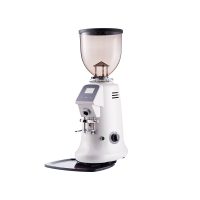
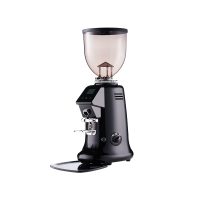
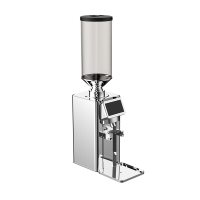
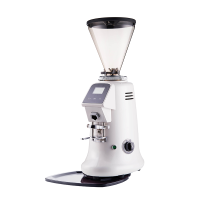
Most electric grinders have adjustable settings that allow you to control the coarseness or fineness of the coffee grounds. This is essential for tailoring your coffee grind to the specific brewing method you plan to use. And often has a timer or grind duration control that allows you to set how long the grinder operates. This feature helps you achieve a consistent amount of coffee grounds.
A blade grinder, also known as a propeller grinder, is a type of coffee grinder that uses spinning blades to chop coffee beans into smaller particles. It’s a simple and affordable option for grinding coffee, but it has some limitations compared to burr grinders, which are known for their precision and consistency.
Burr grinders are the industry standard for coffee grinders at home and in cafes.
It is known for its precision and ability to produce consistent and uniform coffee grounds. It’s named after the machine’s two burr or millstone-like grinding surfaces. These burrs can be made of various materials, including steel, ceramic, or even titanium, and they come in different shapes and sizes depending on the grinder’s design.
Burr grinders come in two types: flat burr and conical burr, these are two different types of burrs used in coffee grinders. These burrs play a crucial role in determining the grind size and consistency of the coffee grounds, which, in turn, affects the flavor and quality of the coffee. Here are the key differences between flat burr and conical burr grinders.
Flat Burr
Flat burrs consist of two flat, parallel discs with sharp edges that grind the coffee beans as they pass between them. And tend to generate more heat during the grinding process due to the friction between the flat burrs. Excessive heat can potentially affect the flavor of the coffee by causing it to become over-extracted or burnt.
They may require more frequent maintenance, as the flat burrs can become dull over time, affecting the grind quality. They may also be more challenging to clean due to the compact space between the burrs.
Conical Burr
Conical burrs have two cone-shaped burrs, one inside the other. One burr remains stationary, while the other rotates to crush and grind the coffee beans. They can produce a slightly less uniform grind compared to flat burrs. However, they often produce a grind that is still highly suitable for most brewing methods, including pour-over, French press, and espresso. They are often easier to maintain because they are self-sharpening to some extent. They can also be easier to clean because of the larger gap between the burrs.